


New Wall Construction
If you’re planning a remodel, addition, or full build, the quality of your walls will shape everything that comes next—your insulation performance, sound control, paint finish, trim alignment, even how “solid” your home feels when you live in it. New Wall Construction is more than putting up studs and drywall. It’s a careful process of layout, framing, sheathing, weather protection, moisture control, and precision finishing that determines whether your space looks crisp and performs well for decades.
At Matthews’ Painting Company, we take a detail-first approach to new builds and renovations—helping homeowners and builders create clean, straight walls ready for high-quality finishes. Whether you need new house wall construction for a custom home, a wall added to reconfigure a floor plan, or new exterior wall framing for an expansion, we help you move from “rough framing” to “ready for paint” with confidence.
On this service page, we’ll walk through what New Wall Construction entails, how to plan it, which materials matter most, and what you can expect from a professional team focused on durability and a refined final look.

What New Wall Construction Includes
The phrase New Wall Construction can mean different things depending on your project. In general, it covers the creation of new interior or exterior walls from start to finish, from structural framing through to surface preparation. Here’s what it typically includes:
1) Layout and design coordination
Before a single stud goes up, we confirm wall placement, door and window openings, and alignment with existing structures. This is where many future issues are prevented—such as uneven transitions, awkward corners, or misaligned openings that can cause trim headaches later.
2) Framing and structural assembly
Wall framing includes top plates, bottom plates, studs, and headers as needed. For exterior walls, framing also accounts for wind loads, shear requirements, and integration with existing framing. Straight walls require not just correct spacing but also the correct selection and placement of lumber, careful crown orientation, and consistent fastening.
3) Sheathing, barriers, and insulation (as applicable)
For exterior walls, sheathing adds rigidity and provides a substrate for weather-resistive barriers. Moisture control details (like flashing around openings) are critical in long-term performance. Insulation choices and placement affect comfort and energy efficiency.
4) Drywall installation and finishing
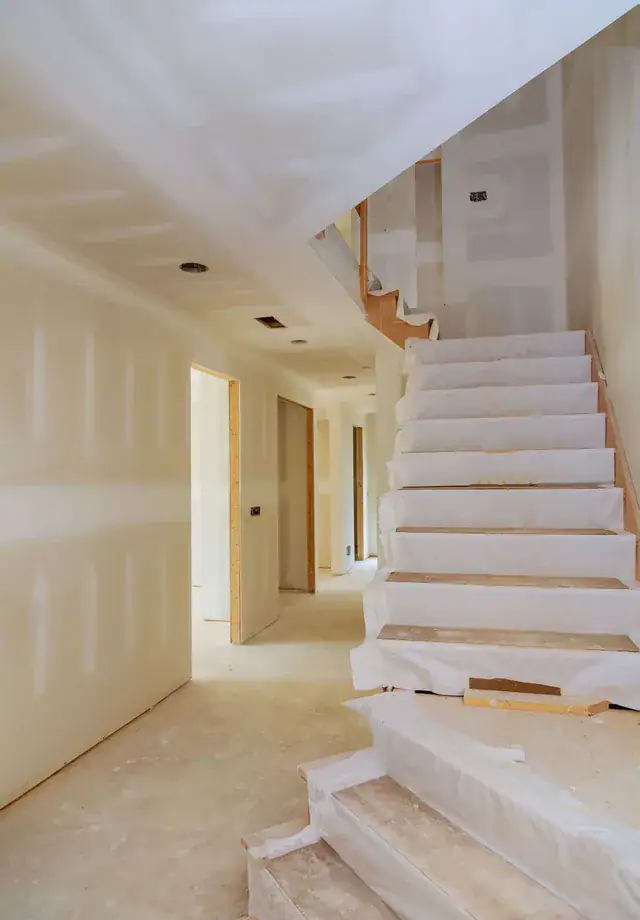
Interior walls typically involve drywall installation, taping, mudding, sanding, and surface preparation. A wall can be “built” but still appear wavy if the finish is rushed. A paint-ready wall is made through careful finishing, not just hanging sheets.
5) Paint readiness and final surface quality
Because Matthews’ Painting Company is finish-focused, we pay special attention to texture, smoothness, corner sharpness, and consistent surfaces. So when the time comes for primer and paint, the finish looks intentional and professional.
If you’re searching for new house wall construction, this full scope matters because the quality of the “hidden work” shows up later—in straight baseboards, clean shadow lines, and paint that looks flawless under natural light.
New House Wall Construction: Interior vs. Exterior Walls
Walls aren’t all built the same. The performance demands of an exterior wall differ from an interior partition, and a professional New Wall Construction plan accounts for those differences.
Interior wall construction
Interior walls can be structural or non-structural. Many are partition walls—built to divide spaces, route electrical service, and provide privacy. The details that matter most include:
- Straight framing: Prevents drywall waves and keeps trim installation clean.
- Sound control: Optional insulation, resilient channels, or other noise-reducing methods if privacy is important.
- Door openings: Correct header sizing and precise rough opening measurements.
- Plumb corners: Keeps cabinetry, tile, and trim aligned.
Interior walls are also where “finish quality” is most visible. Even minor framing inconsistencies can show up as bowed drywall or uneven corner beads after painting. That’s why our approach focuses on making walls not only structurally correct, but also visually true.
Exterior wall construction
Exterior walls face the elements and carry bigger responsibilities. In new house wall construction, exterior walls must handle:
- Structural integrity: Loads, wind resistance, and proper bracing.
- Moisture control: Weather barriers, flashing, sealing, and correct detailing around openings.
- Energy efficiency: Insulation and air sealing that reduce drafts and improve comfort.
- Finish compatibility: A stable substrate that supports siding, trim, and exterior paint systems.
If your project is an addition, matching old and new exterior walls is especially important—both in strength and in appearance. The final goal is continuity: your home shouldn’t look like it grew a “patch.” It should look intentional.
Planning a Successful New Wall Construction Project
Whether you’re creating a new room, finishing a basement, building an ADU, or starting a custom home, great results come from solid planning. Here are key planning elements that improve outcomes and prevent delays.
Define the purpose of the wall
Is it structural? Is it to create privacy? Will it hold cabinets, a TV mount, shelving, or heavy tile? Function determines framing details, reinforcement needs, and material choices.
Confirm dimensions, alignment, and transitions
Walls don’t exist alone. They meet ceilings, floors, adjacent walls, and trim. Planning includes:
- Aligning new walls with ceiling framing and floor layout
- Ensuring clean transitions at corners and doorways
- Avoiding awkward “sliver” drywall areas or mismatched trim returns
Consider mechanical and electrical routing
Walls often contain wiring, plumbing, HVAC ducts, and more. Early coordination avoids rework. A wall built without a plan for routing can lead to unnecessary cuts, patched drywall, and compromised air sealing.
Choose the right finish level
Not all drywall finishing is the same. If you want a premium paint finish, especially with flat walls and strong lighting, you’ll benefit from a higher-level drywall finish. Planning for a smoother result up front saves time and money later—because once paint goes on, imperfections become easier to see.
Schedule realistically
New Wall Construction is typically one part of a larger timeline. A well-sequenced project prevents bottlenecks between framing, mechanical work, drywall, and finishing.
At Matthews’ Painting Company, we help customers understand what “paint-ready” really requires. If your expectation is crisp, clean walls, your plan needs to include the steps that create that outcome.

Materials and Methods That Affect Wall Strength and Finish Quality
The materials you choose for New Wall Construction will influence how your walls perform—and how well they accept finishes like paint, trim, and wall coverings.
Framing lumber quality
Even when studs are “standard,” they vary in straightness. Selecting better-quality lumber and installing it correctly matters. If studs are warped or crowned inconsistently, drywall will telegraph those imperfections.
Fasteners and fastening technique
Proper fastening supports long-term stability. Over time, poor fastening can contribute to nail pops, joint cracks, or movement that shows through finished surfaces.
Drywall thickness and type
Common drywall thicknesses vary by application. Bathrooms and moisture-prone areas often benefit from moisture-resistant options. Fire-rated assemblies may require specific materials. Choosing the correct drywall can also help with sound control and durability.
Joint finishing, corner bead, and surface prep
A beautiful painted wall starts with proper finishing. This includes:
- Even joint compound application
- Smooth feathering
- Consistent sanding
- Strong, straight corner bead installation
- Spot priming and surface checks under light
A high-quality paint job can’t hide a poor surface. That’s why our emphasis on finish readiness is central to how we approach New Wall Construction projects—especially for homeowners who want their new space to look premium.
Why Homeowners Choose Matthews’ Painting Company for New Wall Construction
When you’re investing in new walls—whether for a full build or a single-room change—you want the work to look right the first time. Homeowners choose Matthews’ Painting Company because we treat wall construction as the foundation of the entire finish.
Detail-driven approach
From straight framing to clean drywall finishing, we focus on creating walls that look crisp in real-life lighting—not just under quick inspection.
Finish-first mindset
Because we understand paint systems and final appearance, we build and prep walls to support smooth primer coverage, consistent sheen, and clean trim lines.
Clean jobsite practices
Drywall and finishing can be messy. We prioritize dust control, tidy work areas, and clear communication about what to expect during each phase.
Solutions for remodels and additions
Tying new work into old structures requires care—matching wall thicknesses, aligning planes, and blending textures so your home feels cohesive.
If you’ve been searching for new house wall construction and also want a team that understands what it takes to achieve a clean final aesthetic, Matthews’ Painting Company is built for that overlap: performance plus presentation.
Timeline: What to Expect During New Wall Construction
Every project is different, but most New Wall Construction work follows a predictable sequence. Here’s a general view of what you can expect:
Step 1: Assessment and planning
We review the scope, confirm wall placement, discuss finishes, and identify any special requirements (soundproofing, moisture resistance, load-bearing considerations).
Step 2: Framing
Walls are framed, checked for plumb and alignment, and secured properly. Openings are built to accommodate doors, windows, and any built-ins.
Step 3: Mechanical coordination
If electrical, plumbing, or HVAC must run through the wall, that work typically happens after framing and before closing the wall.
Step 4: Insulation and barriers (as needed)
Exterior walls and some interior partitions receive insulation. Exterior assemblies may include additional layers depending on building requirements.
Step 5: Drywall hanging and finishing
Drywall is installed, taped, mudded, and sanded. This stage can involve multiple visits due to drying time between coats.
Step 6: Surface prep for paint
We inspect the walls under proper lighting, address any surface concerns, and ensure the wall is ready for primer and paint.
A well-managed timeline helps maintain quality and reduce rework. The goal is always the same: durable walls that look clean, straight, and professionally finished.
High-quality New Wall Construction sets the tone for your entire space—structurally, visually, and long-term. Whether you’re planning new house wall construction for a custom build or adding walls to reshape your existing home, the details matter: straight framing, smart planning, proper finishing, and surface prep that supports a premium final look. Matthews’ Painting Company delivers walls that are built to last and designed to look great—so when it’s time for paint and trim, the results feel clean, cohesive, and truly finished.
Frequently Asked Questions
Cost depends on whether the wall is structural, whether it’s interior or exterior, the wall length/height, and the finishing level required. Adding electrical, insulation, or specialty drywall also affects pricing. The best next step is a site review so we can provide a clear scope and accurate estimate.
Yes—when it’s planned correctly. Matching drywall thickness, aligning surfaces, and blending texture are critical. Finish quality is where many projects fall short, which is why we focus heavily on smooth transitions and paint-ready surfaces.
Simple non-load-bearing interior walls can move quickly, but drywall finishing typically requires multiple stages with drying time in between. Larger projects, exterior wall work, or walls requiring mechanical coordination will take longer due to sequencing and inspection requirements.
Sometimes. Load-bearing walls, exterior walls, and walls that change electrical or plumbing often require permits and inspections. Requirements vary by location and project type, so it’s important to confirm local rules before starting.
Drywall installation means the sheets are hung. “Paint-ready” means joints are properly finished, corners are crisp, surfaces are sanded and inspected, and the wall is prepared so primer and paint look smooth and consistent under light.
Service Area
Professional Residential Painting and Staining Contractor for:
Professional Residential Painting and Staining Contractor for Kosciusko County , Noble, Wabash, and Whitley Counties.
If your area is not listed, please contact us.