


What Drives the Cost of an Exterior Repaint in Goshen
September 21, 2026
How to Choose a Painting Contractor in Whitley County
September 24, 2026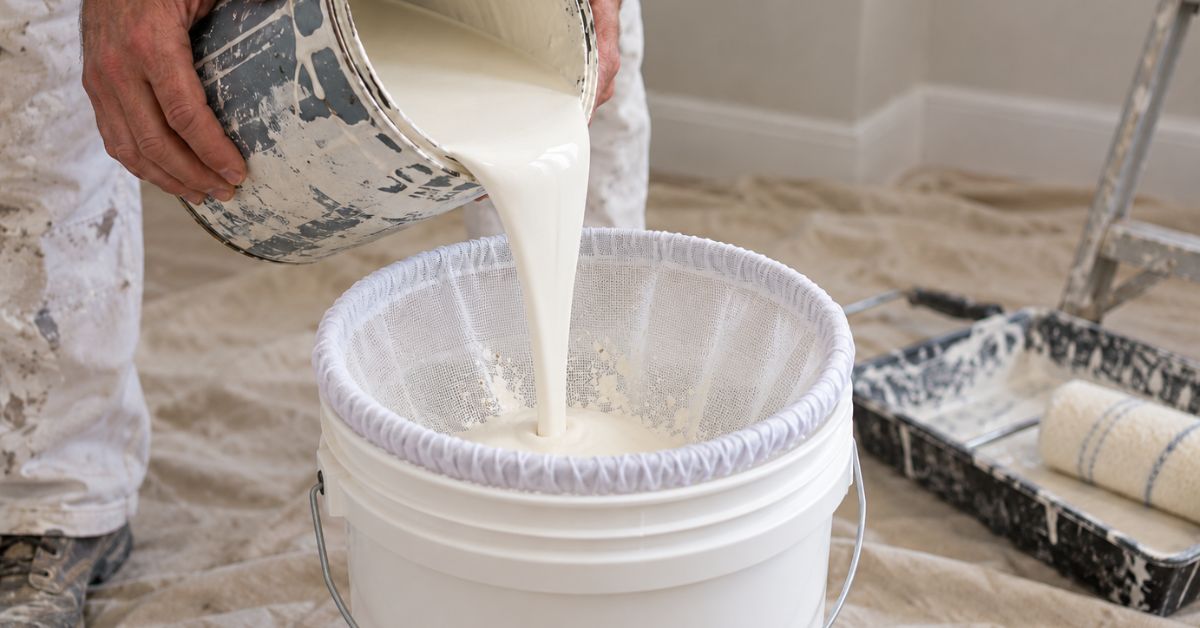
When most people think about painting, they focus on color choices, brushes, or rollers. But professional painters know that a smooth, flawless finish starts before the paint ever touches the wall.
One simple but often overlooked step? Straining your paint.
At Matthews’ Painting Company, straining paint is part of the basic training every new painter learns. It is a small step that makes a big difference in the quality of our final result. This is a step that can help homeowners and DIYers as you tackle your own painting projects as well.
In this guide, we’ll explain:
- Why paint develops chunks
- When straining paint is especially important
- How professional painters strain paint properly
- What can happen if you skip this step
For a complete tutorial, watch owner Matthews’ Painting demonstrate how to correctly strain paint in this YouTube video: How to Strain the Chunks and Debris Out of House Paint or Primer
Why Does Paint Get Chunks in It?
Paint is a liquid, but it does not stay perfectly smooth forever. Over time, several things can cause small clumps or debris to develop:
- Paint that has been sitting on a shelf for months (or years)
- Partially used cans stored in garages or basements
- Primer or ceiling paint that separates over time
- Dried paint bits from the rim of the can falling back inside
- Cold or fluctuating temperatures during storage
Even brand-new paint can sometimes contain small solids, especially thicker primers or high-quality coatings.
Those chunks might not look like a big deal—but once they are rolled onto a wall, ceiling, or trim, they become very noticeable.
What Happens If You Don’t Strain Paint?
Skipping this step can lead to several frustrating issues:
- Bumps and raised specks in the finished surface
- Extra sanding and touch-ups after the paint dries
On smooth surfaces like walls, ceilings, doors, and trim, even the smallest chunk can ruin an otherwise clean paint job.
Professional painters avoid these problems by straining paint before it ever goes into a pan or bucket.
When Is It Especially Important to Strain Paint?
You should always consider straining paint in these situations:
- Using old or leftover paint for touch-ups
- Painting with primer
- Painting ceilings, where flaws are very noticeable
- Working with thicker, higher-quality paints
- Reusing paint that was previously opened
- Painting trim, doors, or cabinets where smoothness matters most
If you are unsure whether paint needs straining, the answer is usually yes.
How Professional Painters Strain Paint for interior and exterior painting projects
This is the same basic process we teach every painter during training at Matthews’ Painting.
Step 1: Use the Right Strainer
Professional painters use one-gallon paint strainers with an elastic band. These are inexpensive, easy to use, and designed specifically for paint and primer.
Step 2: Secure the Strainer
If you are working with a partner, one person can hold the strainer over the bucket.
If you are working alone, stretch the elastic band around the rim of the paint bucket so it stays in place while you pour.
Step 3: Pour the Paint Slowly
Pour the paint or primer directly into the strainer. You will often see chunks immediately. This is exactly what you want to catch before it reaches your wall.
Step 4: Let the Paint Filter Through
Thicker paints and primers take time to pass through the strainer. Be patient. Rushing this step defeats the purpose.
Step 5: Help It Along (If Needed)
If you are using a paint pan, you can use a roller to gently work the paint through.
If you’re in a bucket and short on time, you can carefully squeeze the strainer to push the remaining paint through. This can get messy, so keep rags nearby.
Step 6: Dispose of the Paint Chunks
What is left in the strainer is the debris you do not want on your walls. That material gets discarded.
Can You Reuse Paint Strainers?
Yes, you can reuse a paint strainer —within reason.
During a job, professional painters often reuse strainers for the same color or product by placing them back into the paint bucket and partially sealing the lid. This keeps the strainer clean and ready for continued use.
Once the job is done or the paint changes, the strainer should be discarded.
Why Straining Paint Matters for a Professional Finish
Straining paint may seem basic, but it’s one of those behind-the-scenes details that separates professional results from DIY frustration.
At Matthews’ Painting, our goal isn’t just to apply paint—it’s to deliver:
- Smooth finishes
- Clean lines
- Consistent texture
- Long-lasting results
That level of quality comes from training, experience, and attention to details most people never see.
Want Professional Results Without the Hassle?
If you would rather skip the prep work and trust your home to trained professionals, Matthews’ Painting is here to help. Our team follows proven systems on every job, from surface prep to final walkthrough, so you can enjoy a beautifully finished space without stress. We are the only painting company in northern Indiana to offer a 7-year Labor and Material Warranty, plus 4-hours of free-touch ups (annually) for life.