


Interior Paint Trends for 2026: Finding Colors That Feel Right at Home
October 19, 2026
Hosting Season Is Coming: An Interior Project Checklist Before the Holiday Gatherings Begin
October 21, 2026
Your reception area might ask for a brighter welcome. The hallway would probably request a little attention around the corners. And that wallpaper in the conference room? It may be ready to retire.
Commercial interiors have a way of telling you what needs attention. The challenge is deciding which projects deserve a place on the calendar, especially when you’re balancing maintenance, quarterly budgets and the everyday demands of running a business.
At Matthews’ Painting Company, we help business owners and property managers throughout Northern Indiana turn those observations into a practical plan. Start with this commercial interior project checklist to identify where repairs and painting could make the most difference.
1. Start Where Customers Look First
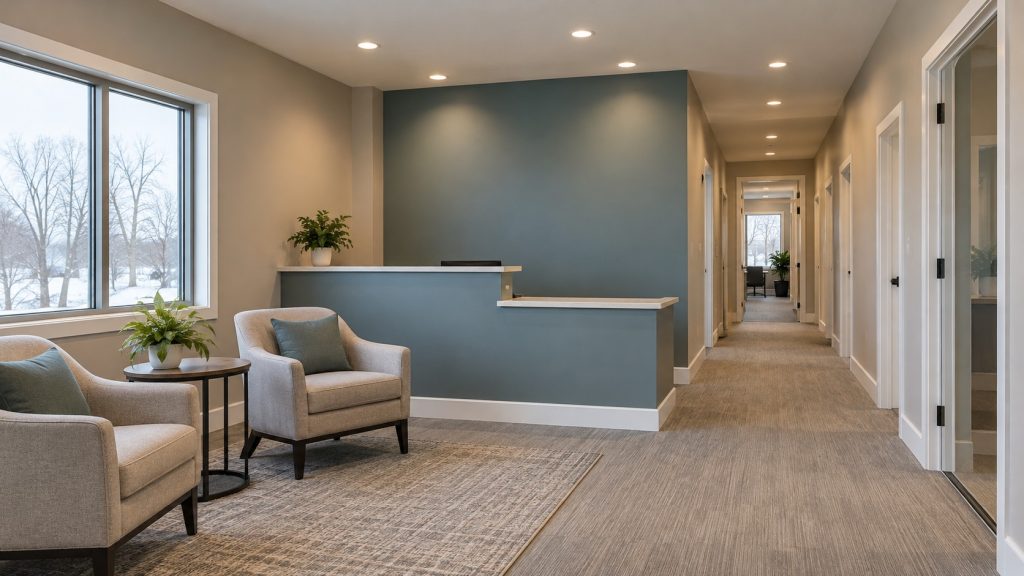
Walk through your front entrance as though you’re visiting for the first time. Before you reach the reception desk, what catches your eye?
You become accustomed to the spaces you use every day. Taking a fresh look can help you notice finishes that no longer reflect the care you put into your business.
Check these areas:
- Entrances and vestibules: Look for marked walls, chipped door frames and damage near handles or push plates.
- Reception and waiting areas: Check for uneven paint touch-ups, faded paint and marks left by furniture.
- Meeting rooms: Look at the walls behind presentation screens, around chairs and near frequently used doors.
- Customer-facing woodwork: Examine baseboards, window trim and doors for worn or damaged finishes.
How to prioritize: If customers regularly see the space, put it near the top of your list. A well-planned refresh in a small, visible area may make more impact than repainting a larger room that visitors rarely enter.
2. Check the Spaces That Work the Hardest
Some areas see more carts, chairs, cleaning and foot traffic in a week than others do all year. They deserve a closer look.
Hallways, restrooms and break rooms may not be the centerpiece of your building, but their condition contributes to how the whole property feels.
Check these areas:
- Hallways and stairwells: Inspect outside corners, narrow passages and walls near handrails.
- Restrooms: Look for peeling finishes, staining and damage around sinks or soap dispensers.
- Break rooms: Check around tables, trash containers, appliances and cabinets.
- Doors and frames: Look for chipped edges, worn finishes and marks near handles.
- Baseboards and trim: Notice damage from cleaning equipment, furniture and everyday use.
If a surface repeatedly needs attention, discuss how it is used and cleaned before choosing the replacement paint. The right paint coating and sheen depend on the surface, its condition and the demands of the space.
How to prioritize: Give extra attention to areas where wear keeps returning. A lasting improvement may require repairs, better preparation or a different paint coating.
3. Look Beyond the Paint
Before choosing colors, take a closer look at what the paint will cover.
Dents, loose trim and failing wallpaper can affect the finished result. Painting over them leaves the underlying problem in place.
Add these items to your commercial interior project checklist:
- Drywall repairs: Dents, holes, damaged corners and visible patches.
- Cracks: Recurring cracks that need evaluation before repair and painting.
- Woodwork: Damaged baseboards, open joints that need caulking, loose trim or worn door casings.
- Wallpaper: Lifting seams, damaged sections or coverings you want removed.
- Stains or peeling paint: Areas where the cause needs to be identified before refinishing.
Water stains, damp surfaces and recurring peeling deserve particular attention. The source of moisture needs to be addressed, and the surface needs to be suitable for painting, before finish work begins.
Matthews’ Painting offers drywall repair, wallpaper removal and in-house carpentry services that can help bring the preparation and finishing work into one coordinated project.
How to prioritize: Put underlying problems ahead of cosmetic improvements. Addressing the cause first helps protect the work that follows.
4. Separate Quick Improvements From Bigger Projects
Your walkthrough may produce a longer interior project list than this year’s budget can accommodate. That’s useful information, not a reason to put everything off.
Divide the list into three manageable groups:
Address First
Include conditions that could lead to further damage, such as an unresolved leak or deteriorating material. Some issues may require another qualified professional before painting or repairs can begin.
Refresh Soon
Focus on visible, frequently used spaces where improvements would make a meaningful difference. Examples might include repairing and repainting a reception area, refreshing restroom walls or refinishing worn doors and trim with a new paint job.
Plan for the Next Budget
Larger projects may need more coordination or funding. Repainting an entire office, removing wallpaper throughout a building or updating several common areas may fit better into a longer-term plan.
Ask for an estimate that clearly identifies the work included in each area. That makes it easier to compare priorities and decide whether to complete the project together or in phases.
A note about touch-ups: Small touch-ups do not always blend into an existing finish. Paint age, sheen, color and application method can all affect the result. In some cases, repainting a full wall provides a more consistent appearance.
5. Find the Right Window on the Calendar
A project needs to fit the way your business operates.
Before scheduling, think about when rooms are occupied, which routes people need to access and whether furniture or equipment can be moved. Winter may provide a useful opportunity for interior work, but the best timing depends on your facility.
Discuss these questions with your painting contractor:
- Are there quieter days, seasonal slowdowns or planned closures?
- Can a room or section be taken out of use temporarily?
- Could the work move through the building in stages?
- Which entrances, hallways and exits need to remain accessible?
- Who will move furniture, wall decorations and equipment?
- What ventilation, drying and return-to-use requirements apply?
- How will employees, tenants or visitors receive updates?
Discuss any work outside normal operating hours early so availability and costs can be included in the plan.
How to prioritize: Look for a realistic window that allows time for preparation, repairs, painting and drying. A clear schedule helps everyone know what to expect.
Your Commercial Interior Walkthrough Checklist
Take this list along on your next trip through the building:
- Review entrances, reception areas and meeting rooms.
- Inspect hallways, restrooms and break rooms.
- Check doors, frames, baseboards and other trim.
- Note drywall damage, worn woodwork and wallpaper concerns.
- Flag moisture issues or recurring damage for evaluation.
- Separate immediate needs from cosmetic updates.
- Identify projects for the next budget cycle.
- Consider whether the work could be completed in stages.
- Discuss access, furniture, equipment and scheduling.
- Request an estimate based on your priorities.
Give Your Building’s To-Do List a Plan
You don’t have to refresh every room at once. Start with the areas that matter most, address the repairs behind the finish and build a schedule that works for your business.
Matthews’ Painting Company has served Northern Indiana homes and businesses since 1998. From interior painting and drywall repair to wallpaper removal and carpentry, our team can help you determine the next steps for your property.
Ready to put your priorities on paper? Call 574-834-3575 or schedule an estimate 24/7 online for your commercial project.