


Cloud Capping: A Fresh Take on the Color-Drenched Room
September 9, 2026
Tools of the Trade: Painting Tools Professional Painters Need for Success
September 17, 2026
Ask the internet when to paint a house exterior and you will get a confident answer built for somewhere with a twelve-month season. Elkhart County does not have one. Between lake-effect snow at one end and humidity at the other, the practical window for exterior painting here runs from roughly late April to the middle of October, and the two ends of that window are where most of the problems happen.
This is not a rule of thumb we apply loosely. Getting the timing wrong is the single most common reason a paint job fails early, and it fails in a way that is not obvious for months — long after the crew has gone and the invoice is paid.
The Weather That Actually Matters Is Not the Forecast
Most homeowners watch the air temperature. What determines whether a coating cures is the surface temperature of the siding and the dew point of the air around it. Those are different numbers, and on a clear spring day they can be wildly different from each other.
A north-facing wall in April can be ten degrees colder than the air. A south-facing wall in July can be considerably hotter, hot enough that paint skins over before it has leveled. And in October the air temperature at two in the afternoon tells you nothing about what happens at two in the morning, when the temperature drops below the dew point and moisture condenses on a coating that has not finished curing.
We work to surface readings and dew point spread. It is why we will occasionally move a start date by a few days when the forecast looks fine, and why that decision is worth more to you than the days it costs.
Spring: Wait Longer Than You Want To
Everyone thinks about paint at the same time — the first warm weekend in April. The problem is that northern Indiana siding holds moisture from the winter long after the air has warmed up. Wood, in particular, can read fine to the touch and still be too wet underneath for a coating to bond.
Painting over trapped moisture produces blistering, usually within the first full summer. The fix is patience: let the substrate dry out, check it rather than assume, and start when the readings say so. In a normal year that means the second half of April at the earliest, and in a wet spring it can be well into May.
Summer: The Reliable Stretch
June through early September is the most predictable part of the season, and it is when the majority of exterior work in Elkhart County should be happening. Long days, warm surfaces and reliable drying between coats.
It is not entirely without problems. Direct sun on a dark wall can push surface temperature past the point where the coating flashes off too quickly, which affects both appearance and adhesion. The answer is to follow the shade around the house rather than working wall by wall in a fixed order — something a crew that knows what it is doing will organize without being asked.
Fall: Where People Get Caught Off Guard
October is the trap. The days are pleasant, the light is good, and it feels like ideal painting weather. But the nights are getting cold quickly, and a coating needs considerably more time to reach full cure at fifty degrees than it does at seventy.
If a finish has not cured before the first hard freeze, it can fail in ways that will not be visible until spring. Chalking, poor adhesion, early chipping. By the time you notice, the contractor who did it may well be difficult to reach.
We book exterior work into October regularly, but with a harder eye on the readings and a willingness to stop. There is a point, usually somewhere in the second half of the month, where the honest answer is to wait until spring rather than take the job.
Winter Is Interior Season
From late fall the exterior calendar closes and our crews move indoors. That is worth knowing for planning: January and February are the easiest months to get a preferred date for interior work, while spring books up fast. The interior projects through the winter keep the same crews working year-round rather than laying off in October and rehiring in April, which is part of why the people who show up have been doing this for years.
So When Should You Book?
Earlier than you think. The exterior calendar for a season fills through late winter and early spring, and the best dates — the settled stretch in June and July — go first. Calling in February for summer work is not premature; it is how you get the date you want.
If you are calling in August hoping for work before winter, we will be honest about whether it fits. Sometimes it does. Sometimes the right answer is to book for the following spring and get the prep done properly rather than rush a finish onto a wall in the last week of October.
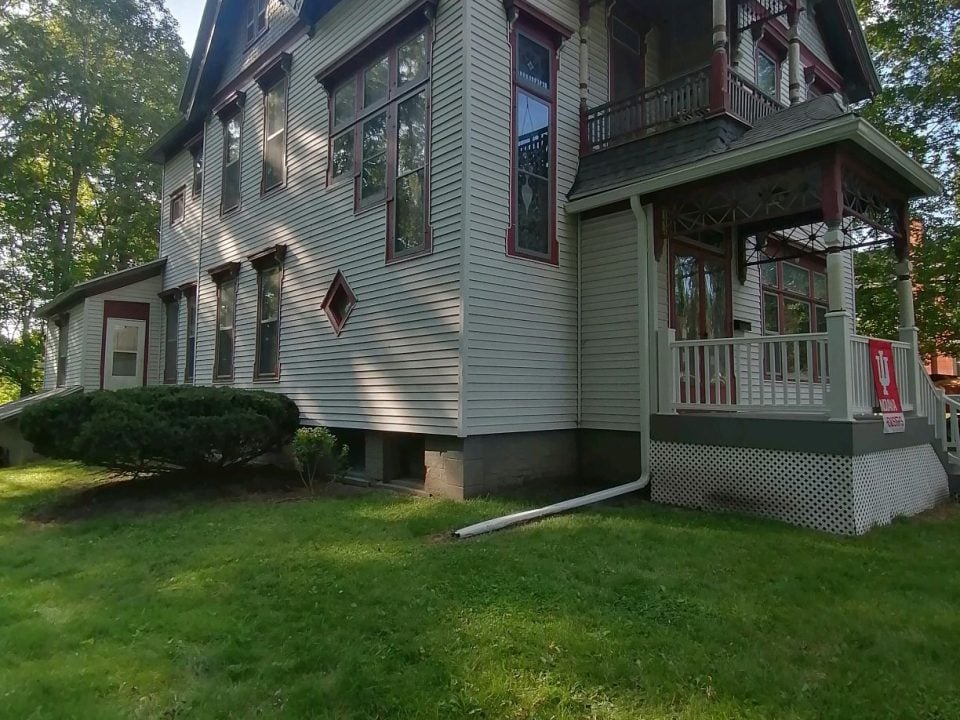
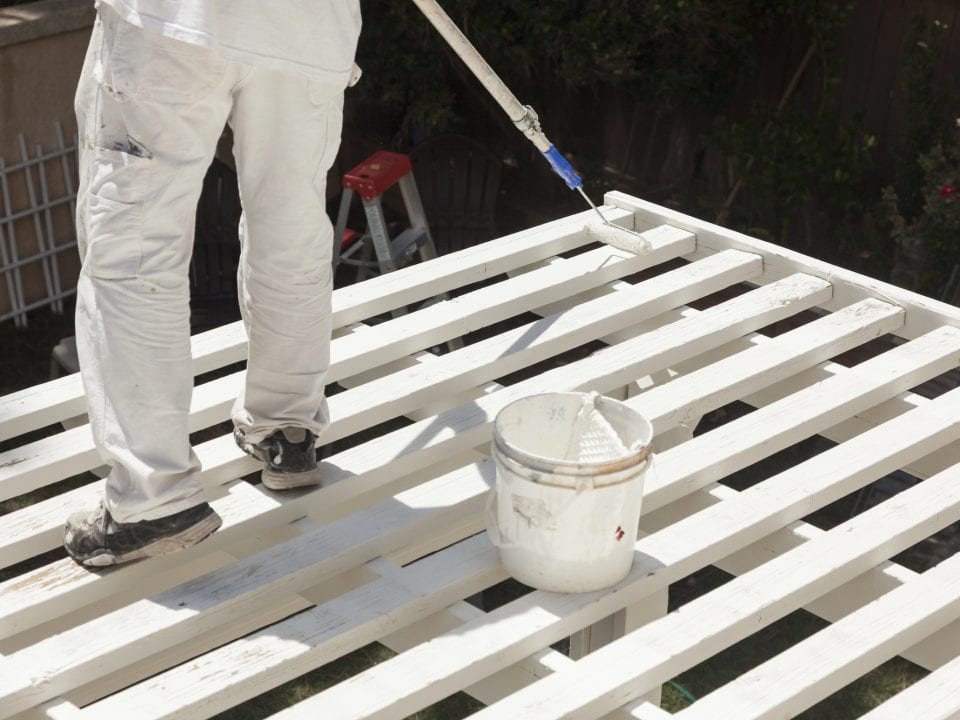
The exterior painting work we do in Goshen covers siding, trim, soffit, fascia, decks and doors, and the quote will tell you when we can realistically start rather than what you want to hear.
A Note on Preparation
Timing is only half of it. A coating applied in perfect conditions over poorly prepared siding will still fail, just more slowly. Washing, scraping, sanding, spot-priming and dealing with rotten trim are what make the difference between eight years and three. The season determines when the finish can go on; the preparation determines how long it stays there.
Talk to Us
If you are planning exterior work in Goshen or anywhere across Elkhart County, the Goshen team will come out, look at the property properly and give you a written price with a realistic date on it. Call 574-834-3575 or book a free estimate online.